
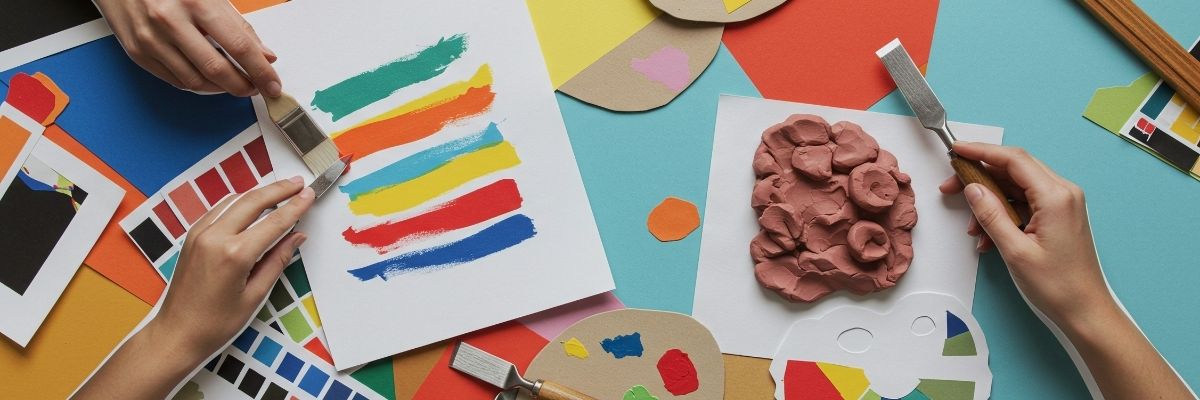
Have you ever felt a swirling storm of emotions, ideas, or experiences inside that words just couldn’t capture? That’s where art steps in – a powerful and versatile language that transcends the limitations of verbal communication. It offers a unique pathway to externalize the internal, to give form to the formless, and to share your innermost world with yourself and others.
Why Can’t I Just Say What I’m Feeling?
We often rely on words to express ourselves, but the human experience is far too complex to be neatly packaged into sentences. Consider the subtle nuances of grief, the fleeting joy of a memory, or the tangled web of anxiety. These emotions are often felt more than understood. Art allows us to bypass the logical, linear processing of language and tap into a more intuitive and visceral form of expression.
Think about it: a painter might use a specific color palette to convey the feeling of melancholy, a sculptor might use a particular texture to represent vulnerability, or a musician might use a dissonant chord progression to evoke unease. These are all non-verbal cues that resonate deeply with our emotions and bypass the need for literal explanation. It’s about feeling the meaning, not just understanding it.
What Kind of Art Are We Talking About Here? (It’s More Than You Think!)
The beauty of art as a form of self-expression is its incredible diversity. It’s not just about painting masterpieces or sculpting grand statues. It encompasses a wide range of creative activities, each offering a unique way to connect with your inner world:
- Visual Arts: Painting, drawing, sculpting, photography, collage, digital art – anything that involves creating a visual image.
- Performing Arts: Dance, music, theater, spoken word – activities that involve using your body or voice to express yourself.
- Literary Arts: Poetry, creative writing, journaling, storytelling – using words in a creative and expressive way.
- Crafts: Pottery, knitting, jewelry making, quilting – creating functional or decorative objects with your hands.
The key is to find the medium that resonates with you the most. Don’t feel pressured to be “good” at it in the traditional sense. The goal is not to create a perfect product, but to use the process as a tool for self-discovery and emotional release.
Okay, I’m Intrigued… But How Do I Actually Do It?
Getting started with art as a form of self-expression can feel daunting, especially if you don’t consider yourself an “artist.” But remember, it’s about the process, not the product. Here are a few tips to help you get started:
- Start Small: Don’t feel like you need to create a masterpiece on your first try. Begin with simple exercises, like drawing abstract shapes or writing a few lines of poetry.
- Focus on Feeling, Not Thinking: Let your emotions guide you. Don’t overthink the process or worry about what others will think. Just allow yourself to create freely.
- Experiment with Different Mediums: Try different art forms to see which one feels most natural and expressive for you. You might be surprised at what you discover.
- Set Aside Dedicated Time: Make time for art in your daily or weekly routine. Even just 15-30 minutes can make a big difference.
- Create a Safe Space: Find a quiet and comfortable space where you can relax and focus on your art. This could be a dedicated studio, a corner of your bedroom, or even just a park bench.
- Don’t Be Afraid to Make Mistakes: Mistakes are part of the creative process. Embrace them as opportunities for learning and growth.
- Use Prompts: If you’re feeling stuck, use prompts to get your creative juices flowing. For example, you could try drawing your favorite memory, writing a poem about your fears, or sculpting a representation of your inner self.
- Journal About Your Art: After you create something, take some time to reflect on your experience. What did you feel while you were creating? What does the artwork mean to you? Journaling can help you gain deeper insights into your inner world.
Finding Your Creative Voice: It’s a Journey, Not a Destination
Developing your artistic voice is a process of self-discovery that takes time and practice. Don’t expect to find it overnight. Be patient with yourself, and enjoy the journey.
- Explore Your Influences: What artists or artworks resonate with you? Study their techniques and styles, but don’t try to copy them. Use them as inspiration to develop your own unique approach.
- Embrace Your Imperfections: Your imperfections are what make your art unique. Don’t try to hide them. Embrace them as part of your personal style.
- Be Authentic: Create art that is true to yourself. Don’t try to be someone you’re not. Let your personality shine through your work.
- Seek Feedback: Share your art with trusted friends or family members and ask for constructive criticism. Be open to their feedback, but ultimately trust your own intuition.
- Keep Practicing: The more you create, the more confident and skilled you will become. Don’t give up, even when you feel discouraged.
The Healing Power of Art: More Than Just Pretty Pictures
Art therapy is a recognized mental health profession that uses creative methods to help people explore their emotions, improve their self-esteem, manage addictions, relieve stress, improve symptoms of anxiety and depression, and cope with physical illness or disability. While you don’t need to be in formal therapy to experience these benefits, engaging in art for self-expression can be incredibly therapeutic.
- Emotional Release: Art provides a safe and healthy outlet for pent-up emotions. It allows you to express feelings that you might not be able to articulate verbally.
- Self-Discovery: The creative process can help you gain deeper insights into your thoughts, feelings, and motivations.
- Stress Reduction: Engaging in art can be a relaxing and meditative activity that reduces stress and anxiety.
- Improved Self-Esteem: Creating something beautiful or meaningful can boost your self-esteem and confidence.
- Enhanced Communication: Art can help you communicate your feelings and experiences to others in a non-verbal way.
Sharing Your Art: To Show or Not to Show?
Whether or not you choose to share your art with others is a personal decision. There are pros and cons to both options:
- Sharing: Sharing your art can be a way to connect with others, receive feedback, and build a sense of community. It can also be a vulnerable experience that requires courage and self-acceptance.
- Not Sharing: Keeping your art private can allow you to explore your emotions without judgment or pressure. It can also be a way to protect your privacy and maintain a sense of control over your creative process.
Ultimately, the decision is up to you. Do what feels right for you and your art. If you do decide to share your work, start with a small and supportive audience, such as trusted friends or family members.
Frequently Asked Questions
- Do I need to be “good” at art to express myself through it? No! The goal is self-expression, not perfection.
- What if I don’t know where to start? Start small with simple exercises, like doodling or writing a few lines of poetry.
- What if I’m afraid of what others will think? Focus on creating for yourself, not for others. Your art is a reflection of your inner world, and it’s okay if others don’t understand it.
- Can art therapy replace traditional therapy? Art therapy can be a valuable complement to traditional therapy, but it should not be used as a replacement for it.
- How do I find an art therapist? You can find a qualified art therapist through professional organizations like the American Art Therapy Association.
Art is a powerful tool for self-discovery and emotional expression. Embrace your creativity, explore your inner world, and let your art speak for you. Start small, experiment freely, and remember that the most important thing is to connect with yourself through the creative process.